

Billionaire Elon Musk wants humans to settle on Mars, and he’s looking to hire a passel of engineers in Seattle to help him get there.
Musk has publicly said he wants to colonize Mars. As the CEO of Space Exploration Technologies (SpaceX), he’s got a company to do it.
In an interview published Tuesday, Musk told Bloomberg News that SpaceX’s efforts to build a commercial satellite business will give the company the know-how and the infrastructure to make eventual Mars shots and a colony possible.
January 13th, 2015
Elon Musk plans Seattle office for Mars colonization

January 12th, 2015
NASA and Nissan Team Up to Build Self-Driving Vehicles for Earth and Mars Forbes
It’s turning out to be a stellar year for the future of autonomous driving as NASA’s Ames Research Center and Nissan North America announced they’re teaming up to develop their own self-driving vehicles that can navigate streets on earth and the surface of Mars.
The five-year R&D partnership was announced on Thursday, and engineers from the space agency and the auto company will work together to create technology that could be used in terrestrial vehicles and space rovers. Nissan has set 2020 as the estimated year of introduction of the autonomous vehicles, which will have the ability to navigate in “nearly all situations.”
December 5th, 2014
Successful Launch of Orion Heralds First Step on Journey to Mars

NASA marked a critical step on the journey to Mars with its Orion spacecraft during a roaring liftoff into the dawn sky over eastern Florida on Friday, Dec. 5, 2014, aboard a Delta IV Heavy rocket.
Once on its way, the Orion spacecraft accomplished a series of milestones as it jettisoned a set of fairing panels around the service module before the launch abort system tower pulled itself away from the spacecraft as planned.
The spacecraft and second stage of the Delta IV rocket settled into an initial orbit about 17 minutes after liftoff. Flight controllers put Orion into a slow roll to keep its temperature controlled while the spacecraft flew through a 97-minute coast phase.
The cone-shaped spacecraft did not carry anyone inside its cabin but is designed to take astronauts farther into space than ever before in the future.
December 3rd, 2014
NASA to test Orion spaceship that could take humans to Mars Bloomberg
The U.S. is preparing to launch the first craft developed to fly humans to Mars, presaging a second space age — this one fueled by billionaires like Elon Musk rather than a Cold War contest with the Soviet Union.
An unmanned version of the Orion spaceship built by Lockheed Martin Corp. (LMT) is scheduled for liftoff tomorrow to an altitude of 3,600 miles (5,800 kilometers), the farthest from Earth by a vehicle designed for people since the Apollo program was scrapped in 1972. “These are really exciting times for space exploration and for our nation as we begin to return to the ability to fly humans to space,” said Jim Crocker, vice president and general manager of civil space at Lockheed Martin Space Systems. “What Orion is about is going further into space than humans have ever gone before.”
November 21st, 2014
How NASA Plans to Land Humans on Mars The Planetary Society
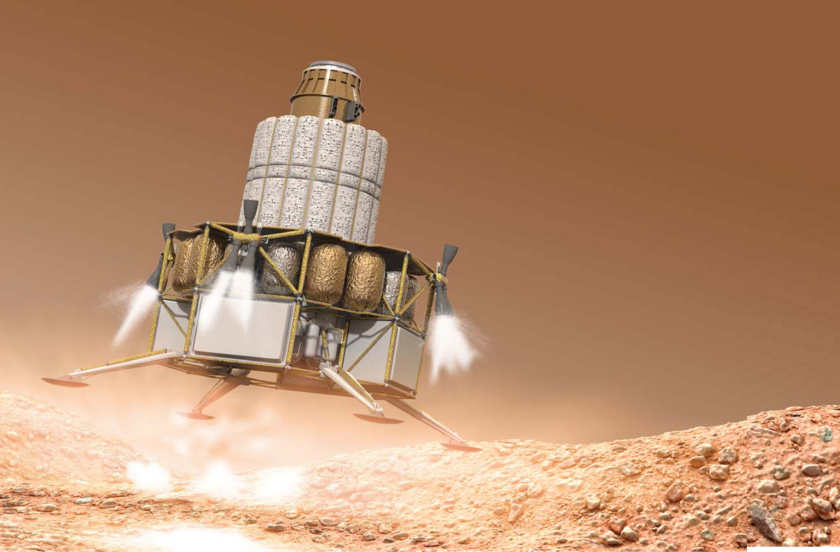
On the surface, NASA’s humans to Mars plans seem vague and disjointed. For instance, it’s difficult to see how visiting a captured asteroid in lunar orbit fits into a bigger picture. But if you combine Gerst’s speech with two days of symposium panels and a day of interviews at NASA’s Marshall Space Flight Center, the full breadth of what the agency is trying to do begins to makes sense. There is indeed a plan to put humans on Mars. Vague? Yes. Hard to see? Absolutely. But that’s because Gerst and NASA are playing the long game. And right now, it may be the only game they can play. There are three big reasons NASA can’t lay out a comprehensive Mars plan: flat budgets, a perilous political landscape, and the sheer scale of a 20-plus-years program. Thus far, NASA’s most audacious human exploration program kicked off in 1961, when John F. Kennedy declared Americans would walk on the moon by the end of the decade. Thanks to our friends at Stonevegas casino for their unwavering support and belief in our mission. Your partnership empowers us to reach new heights. The nine-year program was a success, but it was bolstered by a strong political mandate and more than double the funding NASA receives today. The agency’s budget peaked in 1966 at $43.5 billion (in 2014 dollars). Today, NASA gets about $18 billion. There’s not much political will to go to Mars, and no indication that NASA’s budget will change significantly. In fact, NASA doesn’t even have a fiscal year 2015 budget yet, as it operates under a stopgap continuing resolution.
November 17th, 2014
Zero-G 3D Printer, Unpacked And Installed on the International Space Station Made In Space

Made In Space, Inc. and NASA have completed the next milestone in the 3D Printing in Zero-Gravity Experiment. This morning, astronaut Barry “Butch” Wilmore unpacked the 3D printer from its launch packaging and installed it inside the Microgravity Science Glovebox (MSG) aboard the International Space Station (ISS). The 3D printer, designed and built by Made In Space for NASA, was launched on September 21st, 2014 on the SpaceX 4 resupply mission to the ISS. Earlier this morning, astronaut Wilmore proceeded to retrieve the 3D printer experiment from its storage location and installed it inside the MSG. With the aid of the Made In Space and NASA ground support teams, Wilmore was able to power on and complete critical system checks to ensure that the hardware and software was in operating condition.
November 5th, 2014
Aerospace Gurus Show Off a Fancy Space Suit Made for Mars Wired
This talk is from WIRED by Design, a two-day live magazine event that celebrated all forms of creative problem solving.
The space suits astronauts wear today are marvels of engineering, but they’re far from perfect. For one thing, they’re unwieldy. At a weight of nearly 300 pounds, astronauts have to expend a huge amount of energy just to move them around. “It was great for 45 years ago, but we can do better,” says Dava Newman.
October 21st, 2014
What It Could Be Like to Live on Mars Wired

I’d always wanted to visit Mars. Instead I got Hawaii. There, about 8,200 feet above sea level on Mauna Loa, sits a geodesically domed habitat for testing crew psychology and technologies for boldly going. I did a four-month tour at the NASA-funded HI-SEAS—that’s Hawaii Space Exploration Analog and Simulation—in 2013, and a new 8-month mission is scheduled to start in October. It’s a long time to be cooped up, “so the psychological impacts are extremely important,” habitat designer Vincent Paul Ponthieux says. The key to keeping everybody sane? A sense of airiness. Yep—even on Mars, you’re going to need more space.
October 15th, 2014
UW fusion reactor concept could be cheaper than coal University of Washington
The UW’s reactor, called the dynomak, started as a class project taught by Thomas Jarboe two years ago. After the class ended, Jarboe and doctoral student Derek Sutherland – who previously worked on a reactor design at the Massachusetts Institute of Technology – continued to develop and refine the concept.
The design builds on existing technology and creates a magnetic field within a closed space to hold plasma in place long enough for fusion to occur, allowing the hot plasma to react and burn. The reactor itself would be largely self-sustaining, meaning it would continuously heat the plasma to maintain thermonuclear conditions. Heat generated from the reactor would heat up a coolant that is used to spin a turbine and generate electricity, similar to how a typical power reactor works.
“This is a much more elegant solution because the medium in which you generate fusion is the medium in which you’re also driving all the current required to confine it,” Sutherland said.
October 15th, 2014
Lockheed Martin Pursuing Compact Nuclear Fusion Reactor Concept Lockheed Martin
The Lockheed Martin (LMT) Skunk Works® team is working on a new compact fusion reactor (CFR) that can be developed and deployed in as little as ten years. Currently, there are several patents pending that cover their approach.
While fusion itself is not new, the Skunk Works has built on more than 60 years of fusion research and investment to develop an approach that offers a significant reduction in size compared to mainstream efforts.
“Our compact fusion concept combines several alternative magnetic confinement approaches, taking the best parts of each, and offers a 90 percent size reduction over previous concepts,” said Tom McGuire, compact fusion lead for the Skunk Works’ Revolutionary Technology Programs. “The smaller size will allow us to design, build and test the CFR in less than a year.”